Sign-Up Optimization: Turning an 8-Year-Old Funnel into Vagaro's Fastest Path to Revenue
Increasing activation, improving lead quality, and making mobile signups easier than before.
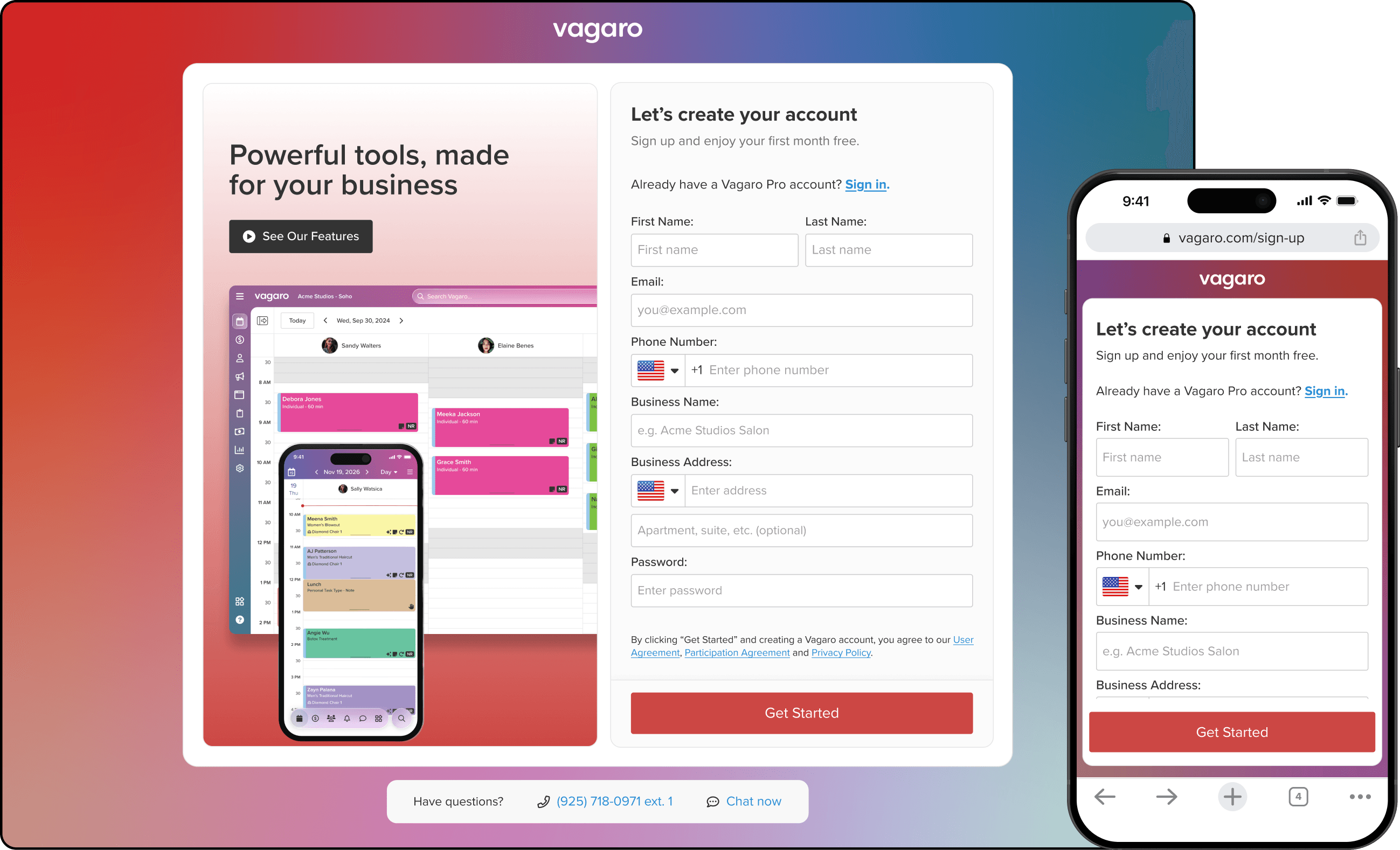
Vagaro's signup flow had not been updated in 8+ years. It asked for too much too early, was nearly unusable on mobile (where 76% of signups happened), and leaked ~30% of users before they ever reached payment.
A mobile-first, progressive signup redesign that reduced the first step to core lead fields, restructured business selection to lower cognitive load, and introduced trust-building payment UX with a secure sales-assisted billing flow.
+18% funnel conversion rate, step drop-off cut from 30% to 18%, lead capture up from 62% to 84%, and an estimated $2.4M increase in new-user ARR.
The Problem
The Old Signup Flow Lost Users Before They Were Fully Committed
Users dropped off early due to friction and poor timing of information, impacting both conversion and sales follow-up.
- Step 1 of the signup flow asked for too much information too early, which required a lot of scrolling on mobile and effort to fill up.
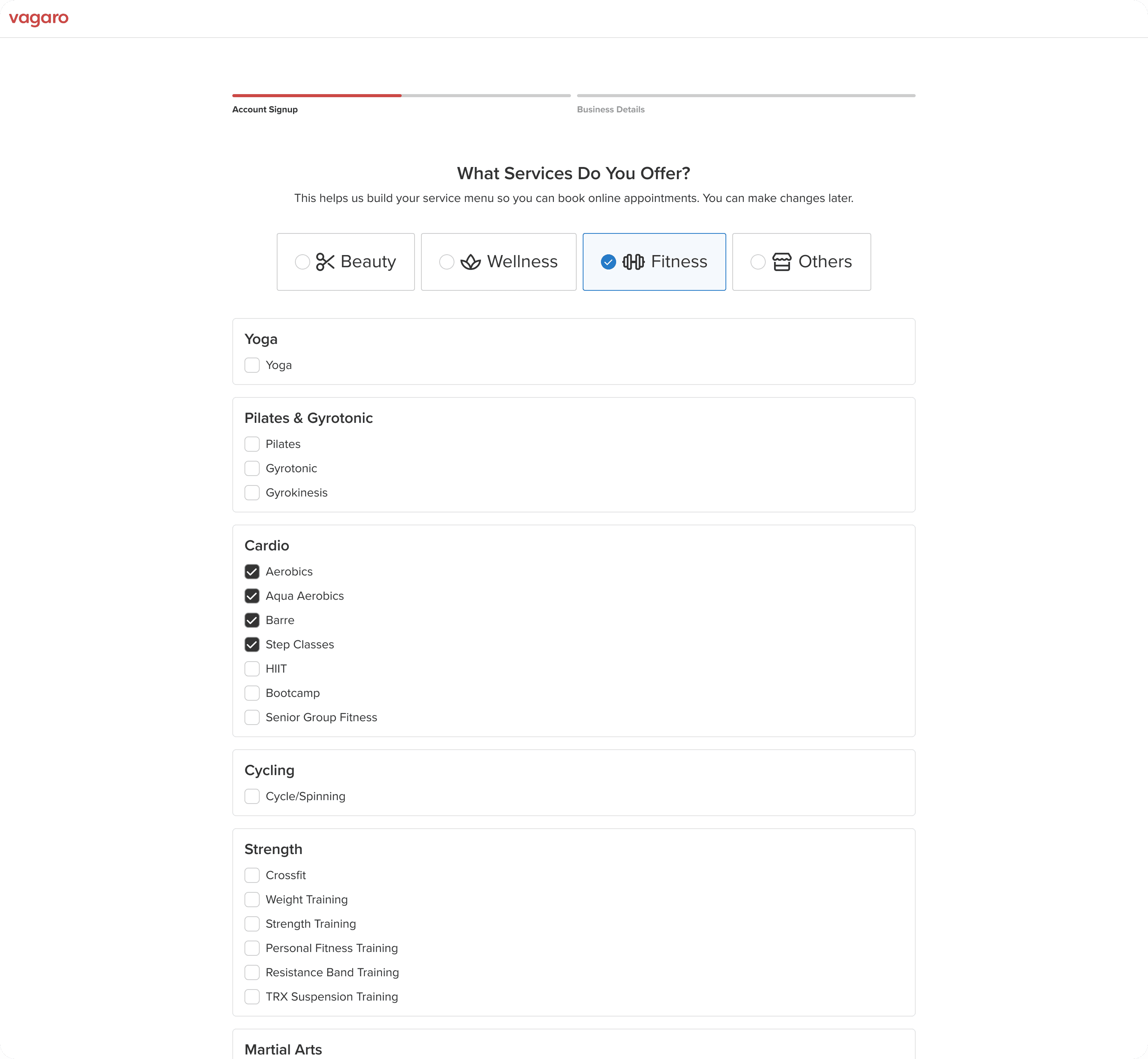
- Step 2 asked users to choose their business type from too many options, which made it feel overwhelming. Even though most users completed it, data showed they were spending too much time deciding, adding avoidable friction.
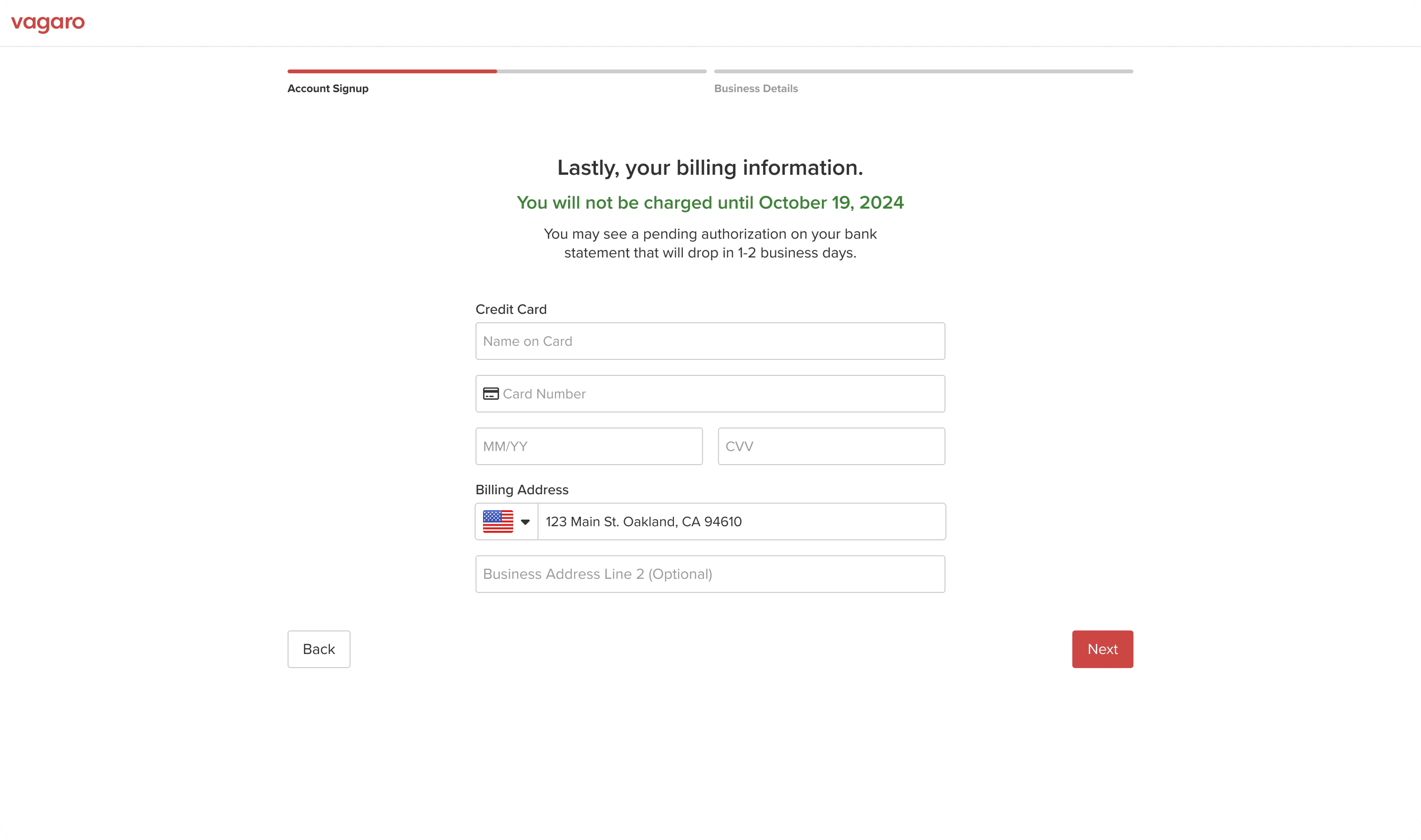
- Sales also lost around 15% of sales-assisted signups because customers felt uncomfortable sharing credit card details over the phone.
The challenge wasn't simply removing fields, but deciding what to ask, when to ask it, and how to align user intent with the needs of Sales, Marketing, Analytics, and revenue.
Original flow
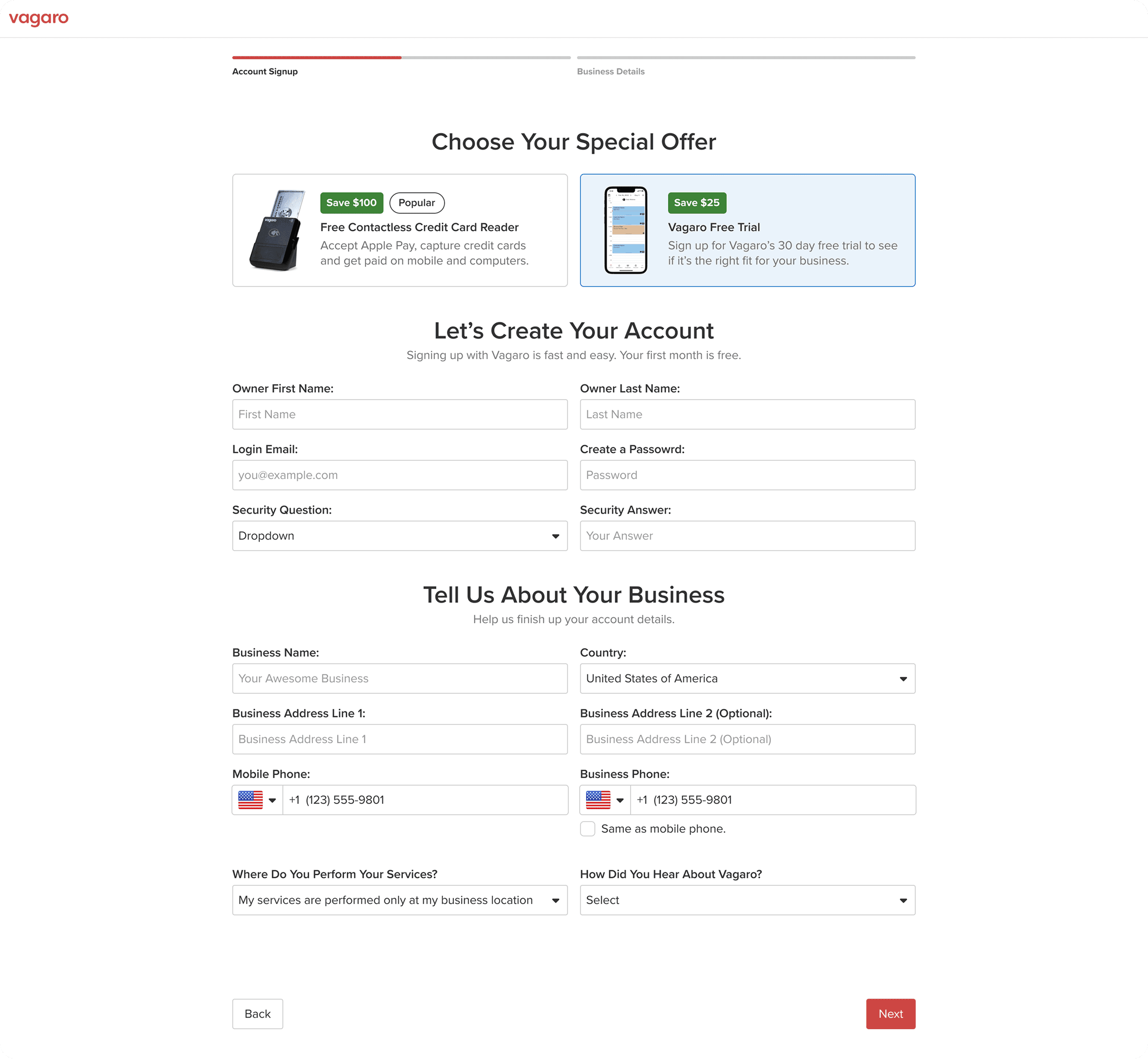
Step 1: Personal info
Step 2: Business type
Step 3: Payment
Goal
Design a signup that earns user trust at every step, not just collects data
Balance user momentum with Sales lead quality, Marketing attribution, and Analytics tracking.
The project was guided by three questions that I aligned the team around early:
- How do we make signing up feel effortless without losing the lead data Sales and Marketing depend on?
- How do we retain enough user context for personalized onboarding if someone drops off mid-funnel?
- How do we help users confidently enter payment details, including in sales-assisted scenarios where they should never have to share card info over the phone?
Data Reveal
Funnel data made the problem specific before any design work began
Amplitude analytics revealed exactly where the flow was breaking and where it wasn't.
I pulled funnel data from Amplitude to quantify drop-off across each step. Steps 1 and 3 showed the steepest losses.
Step 1
~45%
drop-off, especially on mobile
Step 2
90%
completion rate
Step 3
~30%
drop-off at payment
That gap told us where to focus and, just as importantly, what to protect.
Funnel Analysis
Drop-off rate by step
Design Solutions
Three connected design moves that fix the funnel as a system
Reducing friction at the top, preserving intent in the middle, and building trust at the bottom.
01
Capturing Leads Without Losing Momentum
Reducing Step 1 to fewer fields to boost conversion while giving Sales higher-quality leads earlier.
Step 1 had the highest drop-off and was the most complex to redesign. It needed to serve Sales (lead capture), Marketing (attribution), and Analytics (tracking) while feeling effortless to users.
- Reduced inputs to essential fields
- Removed security questions, and all non-essential fields
- Designed mobile-first: device and browser-based autofill, optimized keyboard types per field
This meant that even if a user dropped off after Step 1, Sales had a complete, qualified lead to follow up on.
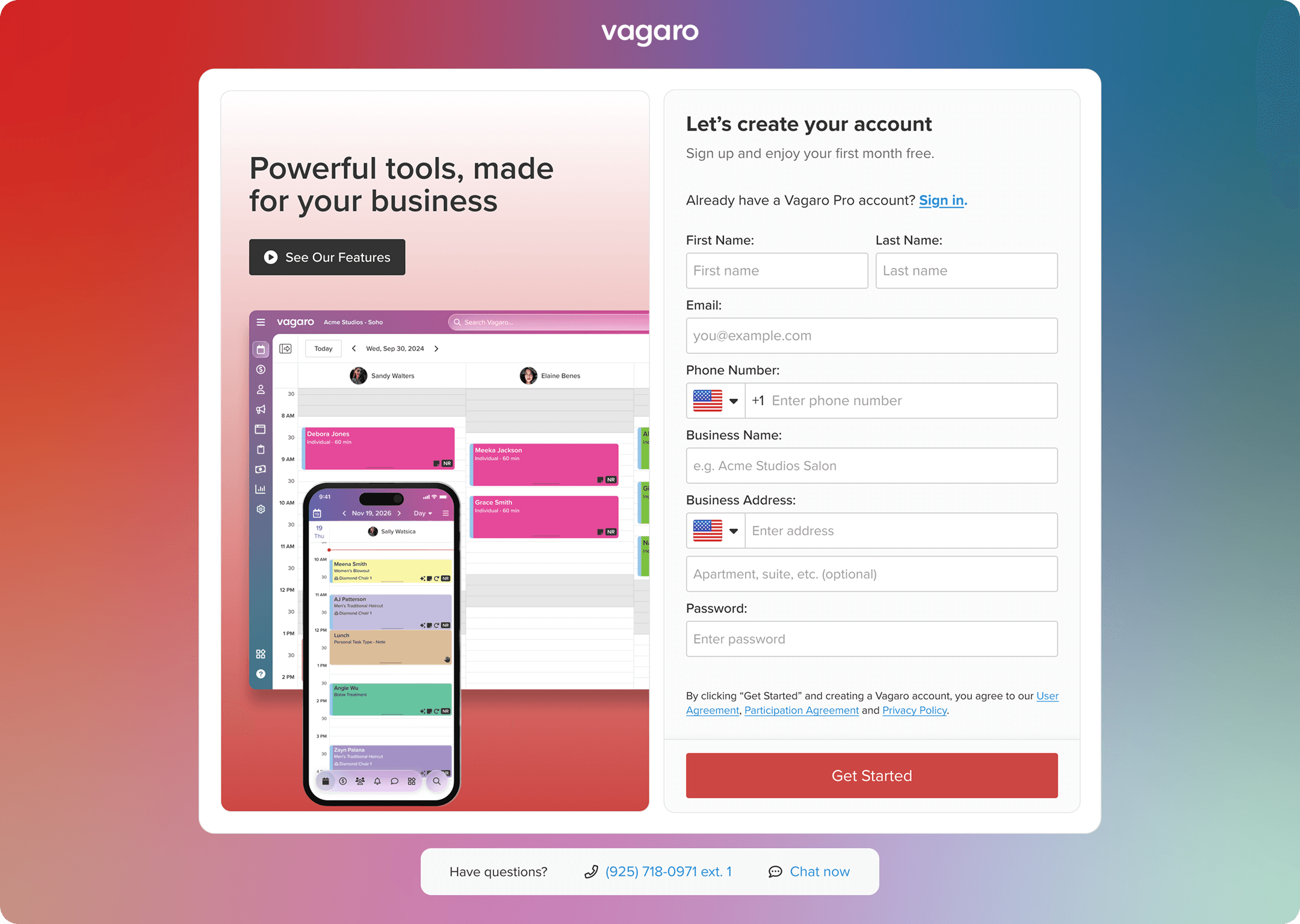
Redesigned flow: streamlined to core lead fields only
02
Preserving a “Lightweight Commitment” Step by Design
A deliberate tradeoff: one extra step to improve activation quality and long-term retention.
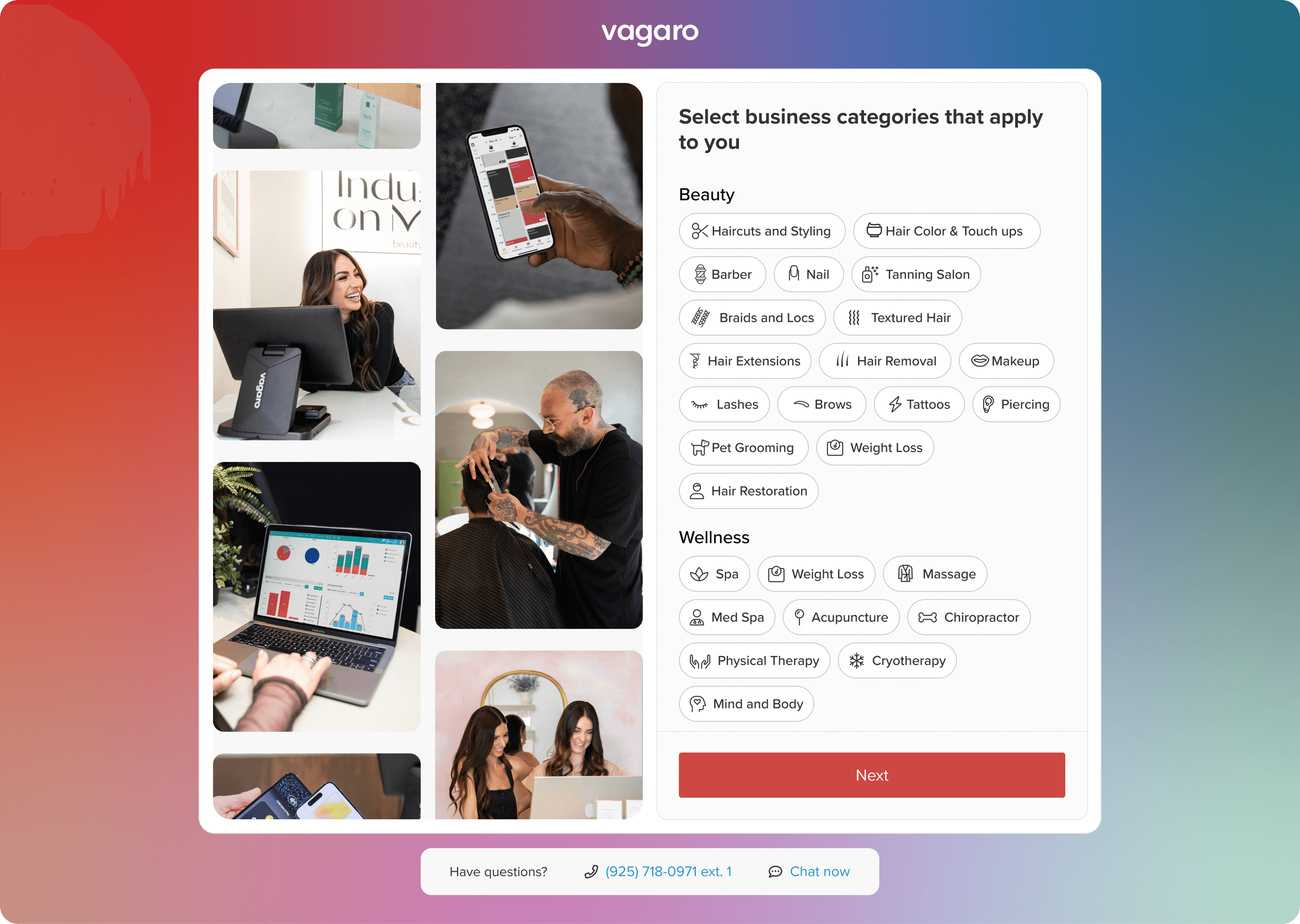
Redesigned flow: high-level business category chips, lightweight and fast
The Tradeoff
Step 2 had relatively high completion rates (90%) but asked users to choose from over 100 service options. From a pure conversion standpoint, removing it would have reduced friction further.
However, eliminating this step would have degraded onboarding quality and increased setup effort post-signup.
The Decision
Instead of removing the step, I clarified its purpose and reduced its cognitive load. The redesigned step:
- Presents only high-level business categories as selectable chips
- Avoids exposing granular service options during signup
- Remains visually lightweight and fast, especially on mobile
This step was intentionally retained because:
- It creates early emotional investment and clarity
- It powers AI-generated business descriptions later in onboarding
- It enables pre-population of services and classes, reducing post-signup setup friction
We accepted one additional step in the funnel to improve activation quality and long-term retention, rather than optimizing solely for shortest-path conversion.
03
Designing for Trust, Speed, and Sales-Assisted Edge Cases
Building confidence at the payment gate and solving the sales-assisted billing problem.
The credit card step caused major drop-offs. Trust signals were weak, alternative payment methods were absent, and the sales-assisted path had no way for users to enter card details privately.
- Added security indicators (SSL badges, card brand logos, “Secure checkout” text)
- Introduced Apple Pay and Google Pay to reduce manual entry
- Optimized inputs with autofill, smart field behaviors, and auto-tabbing
- Designed a secure sales-assisted flow: Sales sends a one-time secure link via email or SMS, the user enters payment privately, then chooses to continue self-serve or resume assisted support
This last piece solved a real revenue leak. The ~15% of sales-assisted signups that stalled due to phone-based card sharing now had a path that preserved conversions, respected user trust, and handled sales-assisted edge cases without friction.
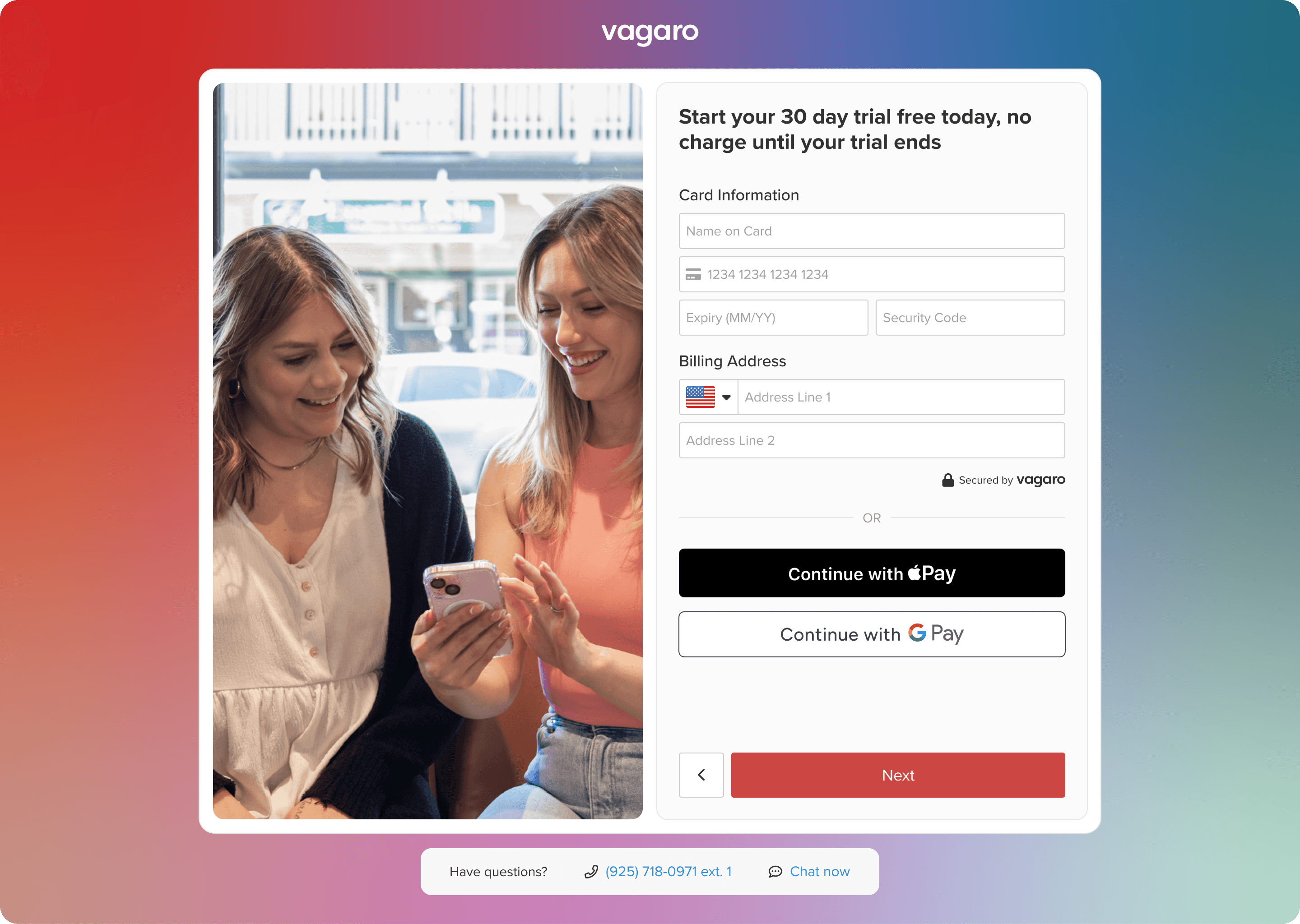
Redesigned flow: Apple Pay, Google Pay, security indicators, and streamlined card entry
Prototype
See the full sign-up flow in action
Impact
Results and Impact
The redesigned funnel launched as an A/B-tested MVP across multiple regions over four weeks. We measured performance against the previous flow using metrics directly tied to revenue and lead quality.
Funnel Conversion Rate
Increased the percentage of site visitors who completed signup and entered payment, driving significantly more users to become paying accounts.
Step Drop-off Reduction
Reduced cumulative drop-off across steps from ~30% to 18%, with the largest gains in the first transition after simplifying early inputs.
Lead Capture Rate
Increased full contact capture in Step 1 from 62% to 84%, giving Sales higher-quality leads even when users did not complete payment.
Estimated Increase in ARR from New Users
The redesigned signup flow generated an estimated $2.4M in new annual recurring revenue, driven by higher paid conversion and improved sales recovery.
$2.4M
Reflection
The highest-leverage design decisions were about timing, not aesthetics
Knowing when to ask, what to defer, and what to intentionally keep.
The biggest shift wasn't simplifying the signup flow, but realizing that conversion problems in SaaS are rarely about friction alone. They are about how well user intent, business constraints, and data systems are aligned before design begins.